Description
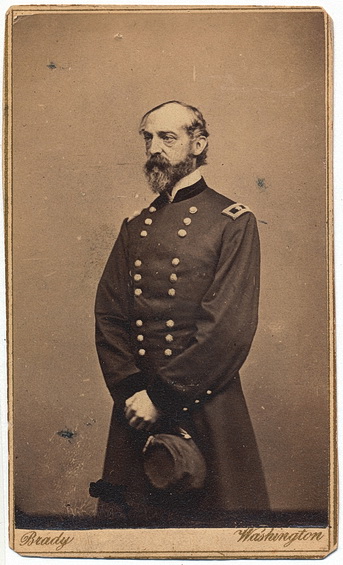
On August 31, 1861, Meade was promoted from captain to brigadier general of volunteers, and was given command of a Pennsylvania brigade. He helped work on the defenses of Washington, then joined the army of the Potomac under General George B. McClellan on the Peninsula and participated in the Seven Days battles at Mechanicsville, Gaines’ Mill, and Glendale. At Glendale, he received several serious wounds. After recovering, he was sent to lead a brigade in the corps of Irvin McDowell at the battle of Second Manassas. He was then sent to replace John F. Reynolds as division commander in the corps of Joseph Hooker, and led the division through the battles of South Mountain and Antietam. He commanded the 3rd Division during the battle of Fredericksburg, and then commanded the V Corps at the battle of Chancellorsville. After the Union defeats at these battles, Hooker resigned from command of the army, and on June 28, 1863, Meade was given command of the Army of the Potomac. Meade would achieve both his greatest victory, and make his greatest mistake, during his first encounter with Confederate general Robert E. Lee.
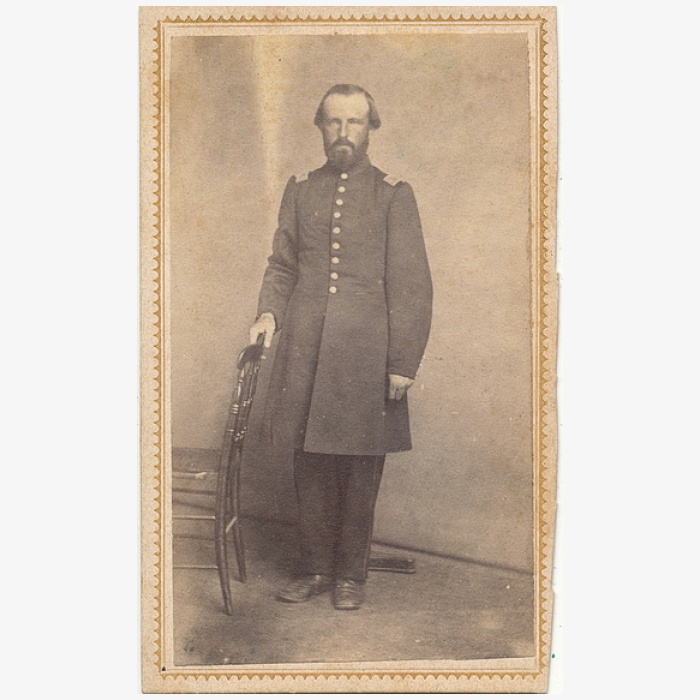
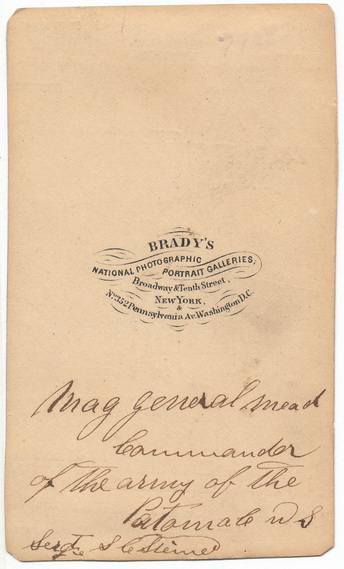
During the battle of Gettysburg, although still new to the command of his army, and suffering great losses of such leaders as John Reynolds, Meade was able to both hold off Lee’s attacks and finally smash the Confederate army on the third day. After the battle, Lee was able to retreat back into Virginia, and Meade received harsh criticism from President Abraham Lincoln for not finishing off the Army of Northern Virginia in its weakened state. Meade offered his resignation, but it was denied, and he was promoted to brigadier general in the regular army on July 7, 1863. Meade continued to command his army during the Bristoe Station and Mine Run campaigns, but both proved to be indecisive. In the spring of 1864, Ulysses S. Grant, the newly appointed lieutenant general and general-in-chief of Union forces, made his headquarters with the Army of the Potomac. Although Meade was nominally in charge of the Army of the Potomac, Grant made all command decisions in regards to the movement of the army. Meade commanded the army through the battles of the Wilderness, Spotsylvania, and Cold Harbor, and finally outside of Petersburg. After his successes during the battles, Grant asked for Meade to be promoted to major general, and it was permitted. Although he had served well under Grant for the last year of the war, he was not present at the surrender of Lee’s army in Appomattox, and was largely overshadowed by Grant. After the war, he held several military commands and returned to Pennsylvania, where he died in 1872. This example bears a period ink inscription on the reverse reading, “Mag general Mead Commander of the Army of the Potomac US Sergt S. C. Stiener”. Sergeant Samuel C. Stiener would muster with the 49th Pennsylvania Infantry in August, 1863. he would serve until his discharge in July of 1865.