Description
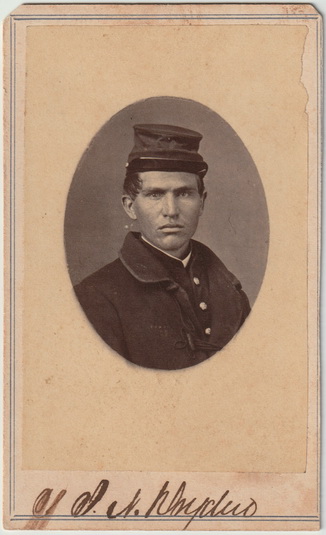
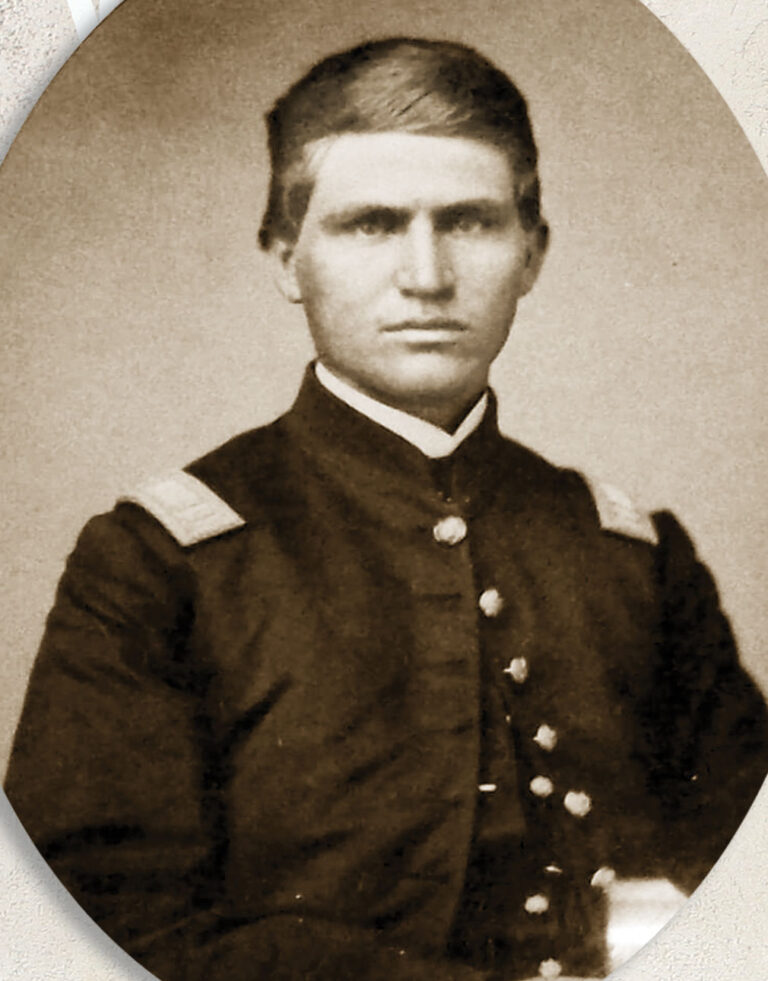
Wonderful carte view identified as Captain Isaac N. Dryden of the 24th Ohio Infantry. Isaac would muster with the regiment in June of 1861 and was immediately appointed as one of Company D’s eight corporals. Soon after, he was promoted to sergeant before the 24th Ohio saw its first action at Cheat Mountain, (West) Virginia, in September 1861. He must have performed capably under fire, because in mid-November, he was selected to serve as Company G’s second lieutenant. As Union forces pushed south into northern Mississippi, the 24th Ohio was one of the first regiments to enter Corinth on May 30th 1862, after a month-long siege. The following month, Isaac would be promoted to 1st lieutenant of “B” Company. Following the Battle of Stones River, the regiment had lost ninety-eight men, including regimental commander Colonel Fred Jones and three other officers. Dryden took temporary command of Company B. The 24th Ohio’s temporary commander, Captain Armstead Cockerill, composed an after action report giving “great praise” to Lieutenant Dryden and seven of his surviving fellow officers “for gallant and efficient services rendered during the entire engagement, displaying that coolness and bravery so necessary in such emergencies.”. A few weeks later, Dryden was again singled out for commendation by his brigade commander, Colonel William Grose. When Grose’s brigade encountered approximately 1,000 Confederate cavalrymen near Woodbury, Tennessee, the Federals caused the enemy “to retire in confusion, double-quick,” and the colonel reported that he had noticed Lieutenant Dryden and another officer “as prompt and efficient commanders of the front skirmish lines.”. In January 1863, Dryden was promoted to captain, with a date of rank of 31 December 1862, and by March, he had returned to Company D as its commander. In May, he and a first lieutenant requested assignments as field officers “of any Negro troops now raised or to be raised.” The two officers explained: “The sole and single purpose of this application is with a view to serving our country more, in a new and partially untried sphere of duty, and as for our competency and general good character we confidently refer to the endorsements upon this application, relative thereto.”. His service with the United States Colored Troops was endorsed by Lieutenant Colonel Cockerill and eighteen other regimental officers, who suggested that Dryden was “eminently fit” to command any body of troops as a colonel. The officers concluded that Isaac was “a first class drill-master, an excellent disciplinarian, and possesses a happy faculty for instructing raw troops.”. On 9 September 1863, Isaac’s brigade moved up Lookout Mountain, southwest of Chattanooga, driving the enemy away without sustaining any casualties. Colonel Grose’s after action report cited Captain Dryden and his company “for daring bravery in the advance in ascending the mountain and driving and punishing the enemy.”. On 19 September, the armies of Rosecrans and Bragg collided at the Battle of Chickamauga. It was during this fight that Dryden would be severely wounded. The regimental commander’s after action report noted that Captain Dryden had been “borne from the field severely wounded.”. He would be struck in the shoulder by a ball which passed through his lung. Admitted to General Hospital Number Seven, located in the Masonic Academy on College Hill on the southwestern edge of Chattanooga. His condition gradually worsened, and he died on 1 October 1863. The front bottom of this view is signed in period ink. “I. N. Dryden” and is back marked out of Nashville. A wonderful view of this exceptional soldier!