Description
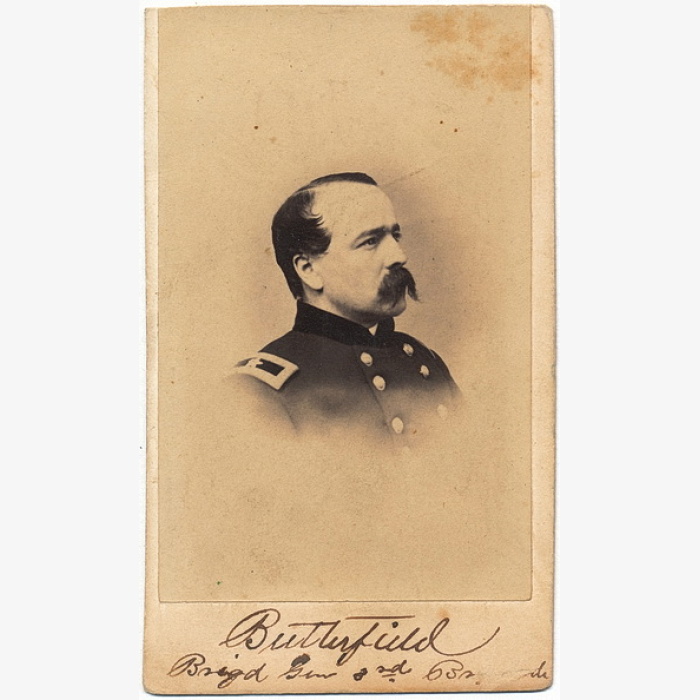
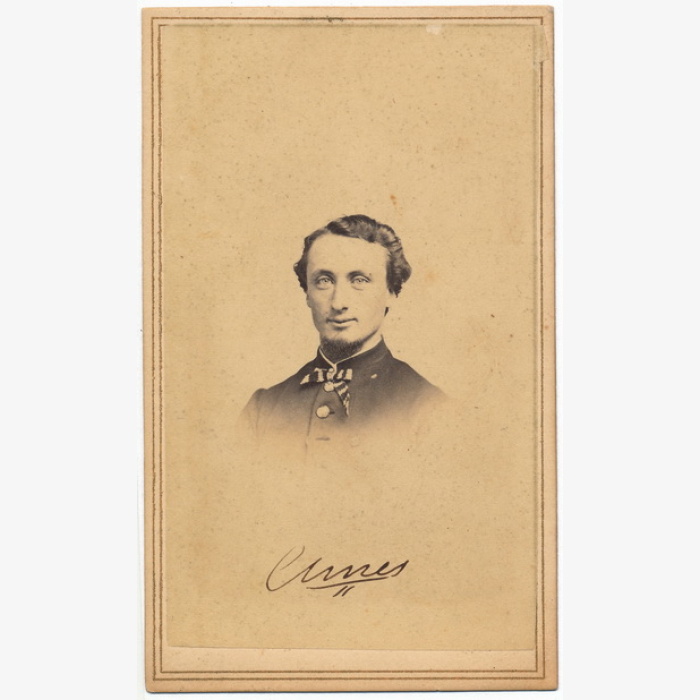
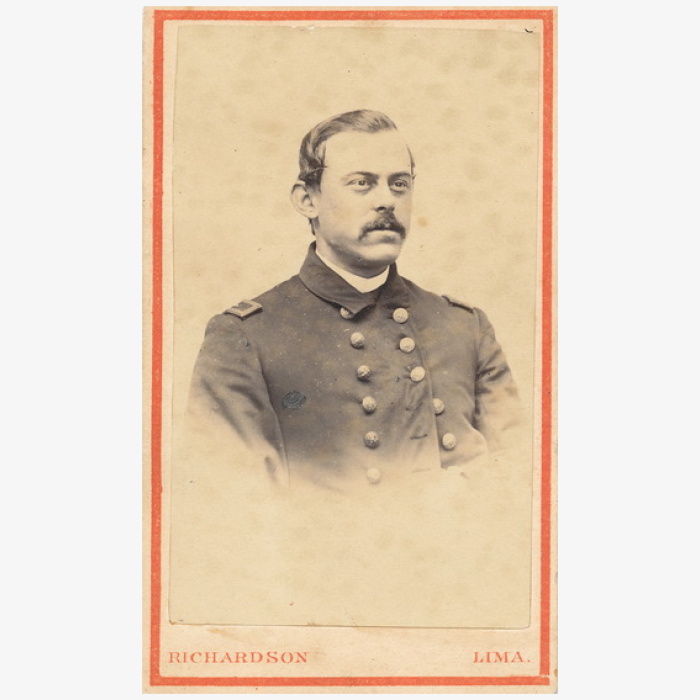
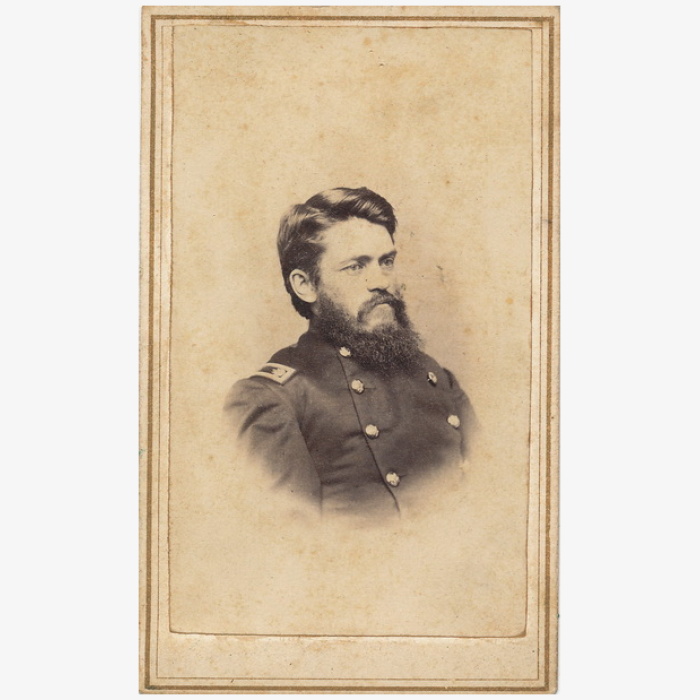
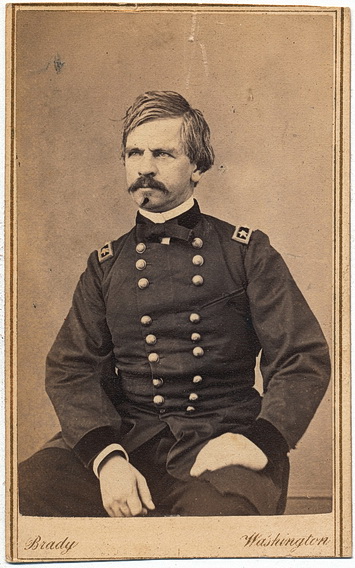
Beautiful carte view of Major General Nathaniel Banks. When the Civil war broke out, he resigned his position his position with the Illinois Central Railroad and was commissioned major-general of volunteers and assigned to the command of the 5th army corps in the Army of the Potomac. Seeing his first active service along the upper Potomac and in the Shenandoah valley, in 1861-62. On March 23, 1862, a part of his troops, under General Shields, defeated Jackson at Winchester, and the next month at the head of two divisions, Banks was assigned to guard the Shenandoah. When one of the divisions had been withdrawn, leaving only 8,000 men with Banks, the force was attacked by Jackson and defeated, but escaped capture. Banks then joined Pope, who had command of the army of Virginia, and on August 9, was defeated at the Battle of Cedar Mountain. He was then for a time in command of the Defenses of Washington, and in December of 1862, commanded the expedition to New Orleans, where he succeeded General. B. F. Butler as commander of the Department of the Gulf. In the spring of 1863 he commanded the expedition against Port Hudson, which finally, after several disastrous attempts to storm it had failed, surrendered on July 9, 1863, when the occupants learned that Vicksburg had fallen. Early in 1864, the general led the expedition up the Red River, his force strengthened by the addition of a powerful fleet, and at Sabine cross-roads met defeat at the hands of General. Richard Taylor. On the next day the Confederates made an attack at Pleasant Hill, but were defeated, and the army withdrew to Alexandria. There the skill of General Joseph Bailey saved the fleet, and the whole expedition withdrew to the Mississippi. In May, 1864, Banks was relieved of his command, resigned his commission, and, returning to Massachusetts, was elected to Congress, where he served, with the exception of one term, until 1877, being for many years chairman of the committee on foreign relations. In 1888 he was again elected to Congress, but, after 1890, suffered from a mental disorder and was forced to withdraw from public life. This is a beautiful, three quarters view of the general. Ever so slightly trimmed along the top and bottom. Back marked by Brady.